Think back to the last time you walked into a room, or a meeting, or a classroom, or a workplace and felt like you didn’t quite fit in. Maybe something about the environment signalled that it was not built with you in mind. That feeling is not abstract. It is real, it is common, and it has measurable consequences for the people who experience it and the organisations that create it.
Now think about the opposite. An environment in which various perspectives not only exist but are truly taken into consideration. An environment in which the playing field is level; one in which your success is not dependent upon whom you know or where you’re from. Such an environment cannot be created by chance. It is the result of deliberate choices, and those choices have a name: diversity, equity, and inclusion.
This blog discusses why DEI is important, what it means in practice, and how organisations across the world are putting it to work in ways that matter.
What DEI Actually Means
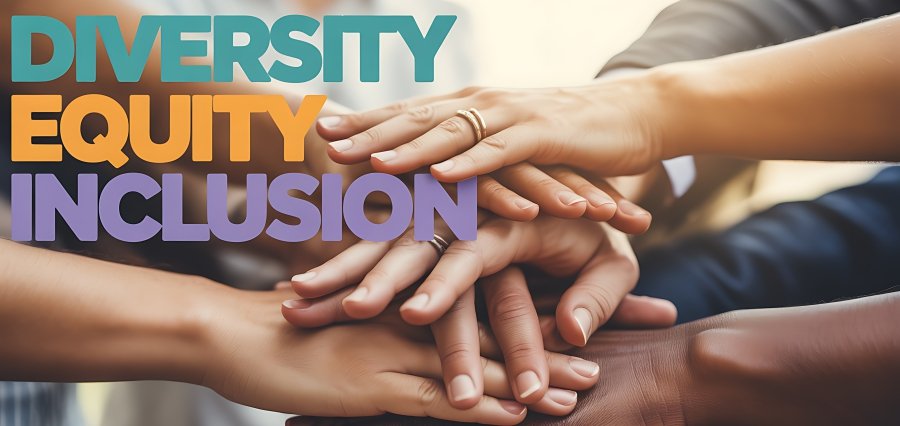
Diversity, equity, and inclusion is a framework that organisations use to build fairer, more representative, and more welcoming environments. Each word has its unique meaning.
Diversity is about who is in the room. It encompasses race, gender, age, nationality, disability, religion, sexual orientation, and socioeconomic background. Equity is greater than equality. Rather than giving everyone the same thing, equity recognises that people start from different places and adjusts support so that everyone has a fair shot. Inclusion is about whether people feel they truly belong once they are there.
All three work together. You can have diversity without inclusion. You can have policies without equity. The goal is all three, working as a system rather than a checklist.
Why DEI Is Important for Business Performance
One of the clearest answers to why DEI is important comes from the business case. The evidence is consistent and significant.
Organisations that score in the top quartile for ethnic and cultural diversity are significantly more likely to outperform their peers financially. Diverse teams bring a wider range of viewpoints to the table, which makes decision-making better, cuts down blind spots, and nudges innovation forward. Companies with strong DEI practices have been found to generate higher innovation revenue than those without.
The talent angle matters too. A large share of job candidates today actively consider a company’s DEI commitments before accepting an offer. Employees who feel genuinely valued are far less likely to leave. High turnover is expensive. Retention is a financial benefit, not just a human one.
Companies with higher employee engagement linked to inclusion consistently hit their financial targets at a higher rate. The connection between a fair workplace and a high-performing one is not coincidental. It is structural.
Real Examples From Around the World
Understanding why DEI is important becomes easier when you look at what it looks like in action.
In Ecuador, Banco Pichincha, the country’s largest bank, recognised that a significant portion of women had no access to a bank account. Policies for gender parity were developed internally by the bank, and a gender bond worth a hundred million dollars was issued to aid women entrepreneurs to get funding.
The Hong Kong stock market had a board diversity policy that mandated listed firms to have at least one woman on their boards. This led to an increase in board diversity, with hundreds of seats on the board becoming available for women.
Accenture, a global professional services company, has built one of the most recognised inclusion programmes in the corporate world. Its employee networks include over one hundred and twenty thousand members in its Pride network and more than twenty-seven thousand members in its disability advocacy group. Women now make up over forty percent of its executive leadership, a figure that reflects years of consistent, structured investment in equity.
Policies for gender parity were developed internally by the bank, and a gender bond worth a hundred million dollars was issued to aid women entrepreneurs to get funding.
The Hong Kong stock market had a board diversity policy that mandated listed firms to have at least one woman on their boards. This led to an increase in board diversity, with hundreds of seats on the board becoming available for women.
Why DEI Is Important for People, Not Just Organisations
The business case is compelling. But the human case is equally important.
The importance of diversity, equity, and inclusion is evident in that the lack thereof has tangible effects on individuals. In organizations which do not embrace all types of employees, competent workers are overlooked. The reason for career stagnation is not the lack of skills, but rather an impediment imposed by the system.
For women specifically, DEI has led to significant achievements in terms of access to leadership positions, equality in compensation, and development. Worldwide, women occupy only a small percentage of top management positions. Organisations that take diversity, equity, and inclusion seriously are the ones actively working to close that gap rather than waiting for it to close itself.
Why DEI Is Important for the Next Generation
Today’s young people who are coming into the workforce have grown up in a much more diverse world than anyone before them. They have different perspectives about fairness and inclusion within the workplace.
Research shows that a large majority of younger consumers and employees care deeply about a company’s values and are paying close attention to whether those values show up in practice. Companies that demonstrate genuine commitment to DEI attract this generation far more effectively than those that treat it as a compliance exercise.
The organisations that are building real inclusion now are positioning themselves well for the workforce and the consumer base of the future.
Conclusion: DEI Is Not a Trend. It Is a Direction.
The question of why DEI is important does not have a single answer. It matters because it makes organisations more innovative, more resilient, and more competitive. It matters because it creates workplaces where people can actually do their best work. And it matters because fairness, dignity, and belonging are not extras. They are the foundation of any environment where human potential can genuinely flourish. Diversity, equity, and inclusion are not a box to tick. It is a direction to move in, consistently and with purpose, because the evidence from organisations around the world shows clearly that when it works, everyone benefits.